
Keynote · Day 1
Tuesday(PM), June 23, 2026
Talk Title
Building Distributed AI Platforms for Enterprise Intelligence: From RAG Pipelines to Agentic Decision Systems
Abstract
As enterprises increasingly adopt artificial intelligence at scale, the challenge is no longer limited to model development but extends to building resilient, distributed platforms capable of delivering intelligence across complex business ecosystems. This keynote explores the evolution of enterprise AI architectures, including Retrieval-Augmented Generation (RAG), agentic AI systems, cloud-native data platforms, and real-time analytics frameworks.
Drawing from practical experiences in financial services and large-scale enterprise deployments, the session will discuss architectural patterns, governance considerations, scalability challenges, and emerging best practices for creating production-grade AI systems that support decision-making across distributed environments.
Drawing from practical experiences in financial services and large-scale enterprise deployments, the session will discuss architectural patterns, governance considerations, scalability challenges, and emerging best practices for creating production-grade AI systems that support decision-making across distributed environments.
Speaker Biography
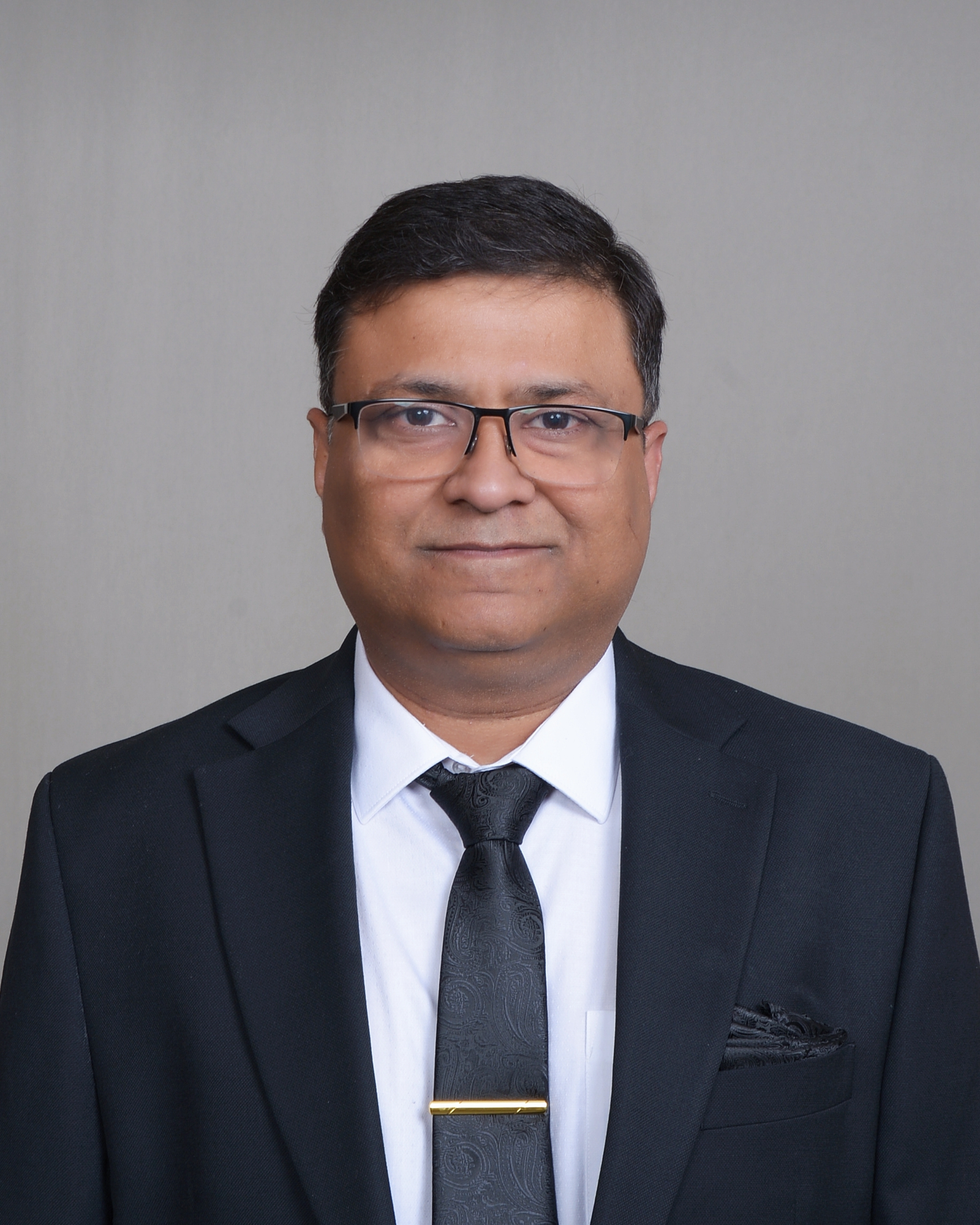
Deepak Saxena is a Director of Data Science and Engineering at TWG Global, where he leads the design and implementation of enterprise-scale AI, analytics, and data platforms. With over two decades of experience spanning artificial intelligence, machine learning, financial analytics, cloud-native architectures, and large-scale data engineering, he has delivered technology solutions across investment management, financial services, and enterprise intelligence domains.His recent work focuses on production AI platforms, Retrieval-Augmented Generation (RAG) systems, agentic AI applications, and intelligent decision-support solutions. Deepak is an active contributor to industry research and professional conferences, with published work in AI-driven financial analytics, credit risk modeling, and enterprise knowledge systems. He is also engaged in peer-review and academic collaboration activities supporting the advancement of applied artificial intelligence and distributed computing technologies.
Keynote · Day 1
Tuesday(PM), June 23, 2026
Talk Title
One Million Columns, Zero Manual Reviews: Autonomous Data Governance at Enterprise Scale
Abstract
Modern enterprises in regulated industries face a critical challenge: they cannot govern what they cannot find. As distributed data systems scale to millions of columns across hybrid cloud environments, manual sensitive data classification becomes operationally impossible.
This keynote presents a production-validated framework for autonomous data governance deployed across over one million database columns in a regulated financial services environment. The classification layer utilizes three parallel engines, rule-based pattern matching, cloud-native machine learning, and Cortex AI to identify PII that traditional systems often miss. Furthermore, we introduce the Autonomous Control Plane (ACP), an event-driven architecture that translates these classifications into real-time access controls and dynamic masking. In production, this architecture resolved over 90% of database governance operations without human intervention. This session will examine the architectural decisions and lessons learned from deploying these systems in high-stakes environments.
This keynote presents a production-validated framework for autonomous data governance deployed across over one million database columns in a regulated financial services environment. The classification layer utilizes three parallel engines, rule-based pattern matching, cloud-native machine learning, and Cortex AI to identify PII that traditional systems often miss. Furthermore, we introduce the Autonomous Control Plane (ACP), an event-driven architecture that translates these classifications into real-time access controls and dynamic masking. In production, this architecture resolved over 90% of database governance operations without human intervention. This session will examine the architectural decisions and lessons learned from deploying these systems in high-stakes environments.
Speaker Biography
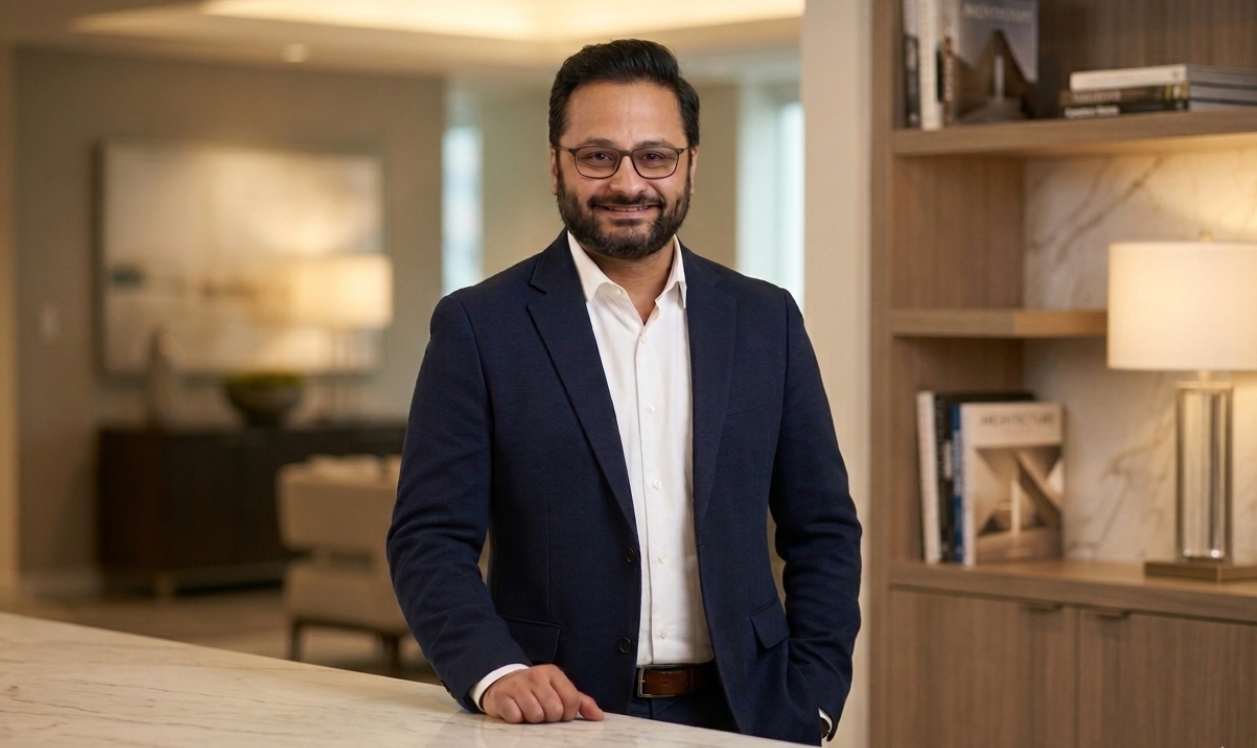
Mayank Sethi is a Principal Database Engineer with 18 years of experience specializing in large-scale distributed data infrastructure and autonomous governance. At Group1001, he architected a multi-engine PII classification framework governing over one million database columns and designed the Autonomous Control Plane. Previously, he was a Principal Database Engineer at PIMCO, leading critical data infrastructure initiatives. Mayank is a published IEEE author, an IEEE member, and a peer reviewer for several IEEE journals. His work focuses on the intersection of distributed systems, AI-driven automation, and data compliance.
Keynote · Day 1
Tuesday(PM), June 23, 2026

Talk Title
Agentic AI in Distributed Enterprise Procurement: Designing Autonomous, Accountable Systems for Public-Sector ERP at Scale
Abstract
This abstract investigates the transformative potential of agentic AI within distributed enterprise procurement frameworks, specifically targeting the complex requirements of large-scale public-sector Enterprise Resource Planning (ERP) systems. As procurement environments become increasingly decentralized, the integration of autonomous agents offers the promise of hyper-efficient, real-time supply chain management and automated contract lifecycle administration. However, the deployment of such systems in the public sector introduces critical challenges regarding operational transparency, regulatory adherence, and fiscal accountability.
This research outlines a design architecture for agentic systems that balances autonomous decision-making with mandatory "human-in-the-loop" governance protocols. We analyze mechanisms for ensuring auditability—ensuring that every automated procurement action is traceable, explainable, and compliant with statutory public-sector mandates. The paper further evaluates the trade-offs between rapid algorithmic execution and the need for rigorous risk mitigation in high-stakes, multi-stakeholder environments. Ultimately, we propose a scalable framework that empowers autonomous agents to optimize procurement efficiency while strengthening the integrity, fairness, and accountability essential to public-sector fiscal stewardship.
This research outlines a design architecture for agentic systems that balances autonomous decision-making with mandatory "human-in-the-loop" governance protocols. We analyze mechanisms for ensuring auditability—ensuring that every automated procurement action is traceable, explainable, and compliant with statutory public-sector mandates. The paper further evaluates the trade-offs between rapid algorithmic execution and the need for rigorous risk mitigation in high-stakes, multi-stakeholder environments. Ultimately, we propose a scalable framework that empowers autonomous agents to optimize procurement efficiency while strengthening the integrity, fairness, and accountability essential to public-sector fiscal stewardship.
Speaker Biography
Animesh Dhole serves as an ERP Application Analyst within the Arkansas Department of Shared Administrative Services (SAS). In this role, he contributes to the technical operations of the state agency, which functions as the administrative backbone of the Arkansas state government.
The Department of Shared Administrative Services (formerly the Department of Transformation and Shared Services) is responsible for optimizing government operations through service delivery and cross-agency collaboration. As an analyst, Mr. Dhole works within an organizational structure that manages critical statewide infrastructure, including information systems, personnel management, procurement, and financial systems. His role supports the department's mission to streamline operations, enhance public service delivery, and maintain the reliability of the technical ecosystems that keep Arkansas state government systems operational.
Keynote · Day 1
Tuesday(PM), June 23, 2026

Talk Title
Zero Trust at Scale: Hardening Distributed Financial Infrastructure
Across Mainframe and Cloud Boundaries
Abstract
Financial institutions run some of the most sensitive distributed infrastructure on the planet, and a large portion of it still lives on IBM mainframes. Most Zero Trust literature assumes cloud-native architecture. That assumption breaks down when your identity boundary spans z/OS LPAR partitions, RACF security domains, AT-TLS policy layers, and hybrid cloud workloads simultaneously.
This keynote examines what Zero Trust security architecture looks like when applied to distributed financial infrastructure at the mainframe-to-cloud boundary. Drawing on production experience at a major U.S. financial institution, it covers three concrete problem areas: policy enforcement across heterogeneous security domains, certificate lifecycle management at enterprise scale, and the gap between Zero Trust theory and what legacy network stacks can actually enforce.
The talk moves past vendor frameworks and examines the real tradeoffs, where AT-TLS policy architecture maps cleanly onto Zero Trust principles, where RACF/ACF2 controls complement modern identity federation models, and where the friction points are that no architecture diagram accounts for. Attendees leave with a grounded understanding of how Zero Trust scales across distributed hybrid environments, not as a product category, but as an engineering discipline applied to systems that cannot tolerate downtime.
This keynote examines what Zero Trust security architecture looks like when applied to distributed financial infrastructure at the mainframe-to-cloud boundary. Drawing on production experience at a major U.S. financial institution, it covers three concrete problem areas: policy enforcement across heterogeneous security domains, certificate lifecycle management at enterprise scale, and the gap between Zero Trust theory and what legacy network stacks can actually enforce.
The talk moves past vendor frameworks and examines the real tradeoffs, where AT-TLS policy architecture maps cleanly onto Zero Trust principles, where RACF/ACF2 controls complement modern identity federation models, and where the friction points are that no architecture diagram accounts for. Attendees leave with a grounded understanding of how Zero Trust scales across distributed hybrid environments, not as a product category, but as an engineering discipline applied to systems that cannot tolerate downtime.
Speaker Biography
Rohit Kumar Shaw is an Infrastructure Engineer, specializing in mainframe network security across IBM z/OS and z/VM environments. His
work covers AT-TLS policy architecture, RACF and ACF2 security administration, SNMPv3 hardening, and certificate lifecycle management for one of the largest financial institutions in the world. He has published peer-reviewed research through IEEE, Springer, and Bentham on Zero Trust architecture on z/OS, TLS 1.3 adoption in legacy
distributed systems, and SNMPv3 AuthPriv migration in high-assurance financial environments. He keynoted ICAIMIS 2026 on TLS 1.3 deployment on IBM mainframes and serves as an IEEE-level peer reviewer across distributed systems and cybersecurity tracks.
Keynote · Day 1
Tuesday(PM), June 23, 2026

Talk Title
When AI Prices Risk: Specifying, Governing, and Verifying Compliance in Multi-State Insurance Rating Systems
Abstract
This abstract examines the complex intersection of artificial intelligence, financial risk assessment, and regulatory compliance within the U.S. insurance market. As insurers increasingly adopt machine learning models for pricing, they face the significant challenge of satisfying divergent state-level regulatory mandates regarding fairness, transparency, and non-discrimination. This research analyzes the technical requirements for specifying "fair" AI pricing models while ensuring they remain governable under the oversight of various Departments of Insurance.
We evaluate current methodologies for verifying that automated rating systems comply with state-specific statutes, particularly those governing disparate impact and data privacy. Furthermore, the abstract explores the necessity of robust algorithmic auditing frameworks that can bridge the gap between opaque computational outputs and legally defensible justification. Ultimately, the work proposes a multi-layered compliance architecture designed to harmonize innovation in predictive modeling with the rigorous consumer protection standards inherent in multi-state insurance regulation.
We evaluate current methodologies for verifying that automated rating systems comply with state-specific statutes, particularly those governing disparate impact and data privacy. Furthermore, the abstract explores the necessity of robust algorithmic auditing frameworks that can bridge the gap between opaque computational outputs and legally defensible justification. Ultimately, the work proposes a multi-layered compliance architecture designed to harmonize innovation in predictive modeling with the rigorous consumer protection standards inherent in multi-state insurance regulation.
Speaker Biography
Anushka Rodi is a dedicated Technical Analyst at American Family Insurance, based in Madison, Wisconsin, where she bridges the gap between complex data analytics and personal lines insurance strategy. Her professional work focuses on leveraging technical insights to evaluate risk, drive operational efficiency, and support data-backed decision-making processes within the insurance sector.
In addition to her corporate contributions, Anushka is an accomplished systems engineer and technology specialist. Her expertise spans the integration of cloud computing infrastructures and conversational artificial intelligence platforms. With a background in building scalable APIs, optimizing multi-tier data pipelines, and implementing secure web application architectures, she is instrumental in designing frameworks that merge predictive analytics with real-time distributed ecosystems. By blending engineering rigor with insurance domain expertise, she drives innovation at the intersection of infrastructure reliability and intelligent financial modeling.
Keynote · Day 1
Tuesday(PM), June 23, 2026

Talk Title
vice president manager of software engineering
Abstract
The Vice President (VP) of Software Engineering serves as a strategic leader responsible for overseeing the entire engineering organization, aligning technical initiatives with overarching business goals. This executive role demands a unique blend of high-level architectural vision, rigorous operational management, and the ability to foster a culture of engineering excellence across multiple teams. The VP manages organizational scaling, budget allocation, and the professional development of engineering leadership, ensuring that development cycles are efficient and scalable.
By bridging the gap between product requirements and technical execution, they champion innovation while maintaining robust system reliability and security standards. They actively cultivate high-performing, cross-functional teams, driving the adoption of best practices to accelerate software delivery and market competitiveness. Ultimately, this position is pivotal in shaping the company's long-term technical roadmap, ensuring infrastructure and software products remain resilient and future-proof.
By bridging the gap between product requirements and technical execution, they champion innovation while maintaining robust system reliability and security standards. They actively cultivate high-performing, cross-functional teams, driving the adoption of best practices to accelerate software delivery and market competitiveness. Ultimately, this position is pivotal in shaping the company's long-term technical roadmap, ensuring infrastructure and software products remain resilient and future-proof.
Speaker Biography
Rajkiran Matta is a Vice President at JPMorgan Chase & Co. in Chicago, where he works within the bank's global payments ecosystem infrastructure that underpins a significant share of the world's financial transactions. With over 16 years of experience in enterprise software engineering, he specializes in distributed systems, edge computing, and low-latency application architecture, with a particular focus on JavaScript and user experience design. His work centers on building resilient, high-throughput systems that move trillions of dollars across global markets daily, without compromising on speed or usability.
In recent years, Rajkiran has extended this systems-level expertise into the design of agentic AI systems, applying principles from distributed computing and low-latency design to build responsive, production-grade AI-driven applications within enterprise environments.
Rajkiran's technical interests include the architecture of low-latency, edge-deployed systems, the convergence of distributed computing and AI agent design, and the role of thoughtful user experience in high-stakes financial software. He brings a systems engineer's perspective to the conversation around AI infrastructure, emphasizing performance, scalability, reliability, and usability as foundational concerns in next-generation application design.
Keynote · Day 1
Tuesday(PM), June 23, 2026

Talk Title
AI Agents That Enterprises Can Trust - The Architecture of Reliability
Abstract
This abstract investigates the technical and organizational imperatives for deploying agentic AI systems within high-stakes enterprise environments. While autonomous agents offer transformative potential for automation and decision support, their adoption remains constrained by concerns regarding non-deterministic behavior, security vulnerabilities, and a lack of systemic transparency. We define an architectural "reliability framework" for AI agents, centered on three core pillars: deterministic governance, verifiable reasoning, and robust fault-tolerance.
By moving beyond opaque, end-to-end neural models, this framework integrates symbolic logic with neural processing to ensure that autonomous actions remain explainable and strictly aligned with enterprise business logic. We further analyze the implementation of standardized, real-time "guardrails" that enforce policy compliance and provide immutable audit trails for every automated transaction. Ultimately, this research demonstrates how modular, audited agent ecosystems can provide the foundational technical trust required for complex enterprise applications, ensuring that autonomous intelligence enhances, rather than compromises, operational integrity and scalability.
By moving beyond opaque, end-to-end neural models, this framework integrates symbolic logic with neural processing to ensure that autonomous actions remain explainable and strictly aligned with enterprise business logic. We further analyze the implementation of standardized, real-time "guardrails" that enforce policy compliance and provide immutable audit trails for every automated transaction. Ultimately, this research demonstrates how modular, audited agent ecosystems can provide the foundational technical trust required for complex enterprise applications, ensuring that autonomous intelligence enhances, rather than compromises, operational integrity and scalability.
Speaker Biography
Rohith Venkata Sai Kumar Potladurthy is a professional software engineer based in St. Louis, Missouri, with over five years of experience designing and building large-scale applications for enterprise and fintech platforms. His expertise lies in developing cloud-native microservices, RESTful APIs, and automation frameworks utilizing Java and Spring-based technologies.
The Department of Shared Administrative Services (formerly the Department of Transformation and Shared Services) is responsible for optimizing government operations through service delivery and cross-agency collaboration. As an analyst, Mr. Dhole works within an organizational structure that manages critical statewide infrastructure, including information systems, personnel management, procurement, and financial systems. His role supports the department's mission to streamline operations, enhance public service delivery, and maintain the reliability of the technical ecosystems that keep Arkansas state government systems operational.